


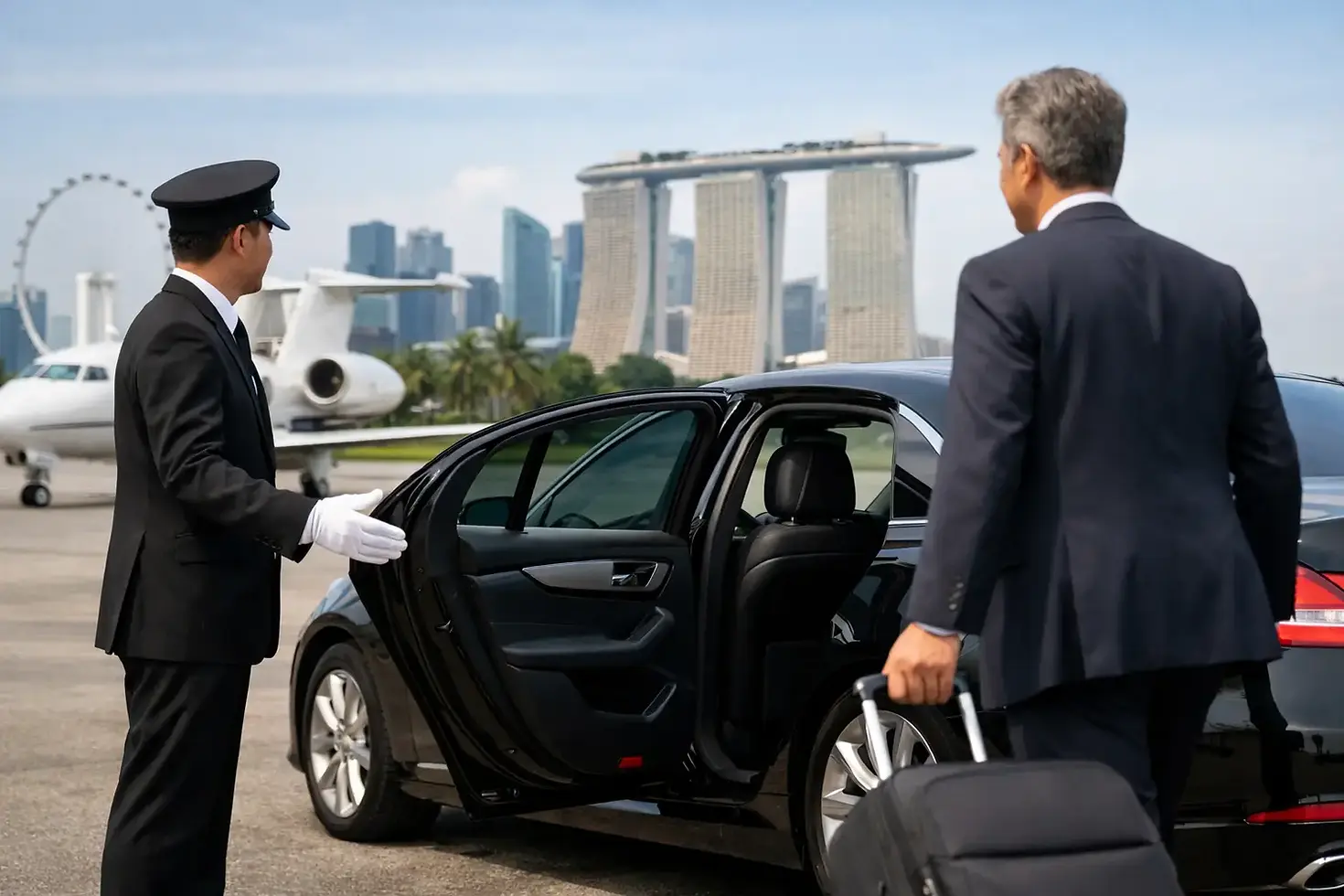
Executive Airport Transfer Singapore Guide
A delayed arrival, a senior guest on a tight schedule, or a family carrying six large cases - airport transport goes wrong when the vehicle does not match the job. That is why booking an executive airport transfer Singapore travellers can rely on is less about appearance and more about timing, capacity, and control.
For business travellers, hotels, travel planners and families, the right airport transfer is a practical decision. You need a driver who arrives on time, a vehicle that fits both passengers and luggage, and a booking process that does not create extra back-and-forth. The executive part matters, but only if the service is run properly.
What executive airport transfer Singapore usually means
An executive airport transfer is not simply a more expensive ride to or from the airport. In practical terms, it refers to a higher service tier built around comfort, presentation, punctuality and better suitability for business or VIP travel. That often means premium saloons, executive MPVs, cleaner interiors, more legroom and a more controlled pickup experience.
That said, the right executive transfer is not always a saloon. A senior management team arriving together may need an executive MPV. A family travelling with children, pushchairs and oversized luggage may need a larger premium vehicle rather than a luxury car with a small boot. For airport work, capacity matters just as much as finish.
This is where many bookings fail. People choose by vehicle image rather than passenger count, luggage volume, arrival terminal, and whether anyone needs meet-and-greet support. A proper transfer provider should help you match the booking to the actual movement, not just the label.
When an executive airport transfer makes sense
If the trip involves corporate travel, client collection, hotel guest transport or any situation where waiting time carries a cost, an executive service is usually worth arranging in advance. It gives you a clearer service standard and reduces the risk of scrambling for transport after landing.
It also makes sense when presentation matters. If you are receiving overseas visitors, company directors or event speakers, the transfer is part of the overall experience. A late or unsuitable vehicle reflects badly on the organiser, even if the flight itself was smooth.
There are also less obvious cases. Early-morning departures, red-eye arrivals and group airport runs often benefit from pre-booked executive transport because public options are limited, luggage is heavier and there is less room for delay. In those cases, reliability is more valuable than novelty.
Choosing the right vehicle, not just the premium badge
The best booking starts with numbers. How many passengers are travelling? How many large cases, cabin bags or special items are involved? Is anyone carrying product samples, golf bags, exhibition materials or child equipment? These details decide the vehicle category.
For one or two passengers with standard luggage, an executive saloon may be enough. For three to six passengers, especially if they are travelling from the airport with checked baggage, an executive MPV is often the safer choice. If the booking involves a larger travelling party, splitting the group into multiple cars can create delays and confusion. A maxi cab, minibus or coach may be the better operational answer, even for premium travel.
That is one of the key advantages of working with a transport provider that operates across categories. The service can be scaled to the booking instead of forcing every airport request into the same vehicle type. MAXI-CAB.COM is built around that model, with fleet options ranging from premium cars to larger people carriers and coaches depending on headcount and luggage load.
Airport pickup details that matter more than people expect
Most transfer complaints come from small planning gaps. The driver may be on time, but the booking still becomes messy if the pickup instructions are vague. Airport transfers need proper handling of flight number, arrival time, terminal, passenger contact number and expected luggage count.
If the passenger is arriving from overseas, meet-and-greet arrangements can make the handover much easier. This is especially useful for first-time visitors, elderly travellers, corporate guests and families arriving late at night. Without that detail agreed in advance, passengers may be left searching pickup points while the driver waits elsewhere.
For departures, the timing should be based on airline check-in requirements, route conditions and the time of day. Leaving too early is inconvenient. Leaving too late turns the whole transfer into damage control. An experienced operator should know the difference between a standard city pickup and one that needs extra buffer because of traffic patterns or a large passenger group.
Booking for executives, families and groups involves different priorities
Corporate travel usually prioritises time, consistency and discretion. The vehicle should be presentable, the route direct, and the booking simple enough for a PA, office manager or hotel concierge to arrange quickly. Clear invoicing and confirmed vehicle details also matter for repeat business use.
Family airport travel tends to focus more on luggage capacity, child seating requirements and pickup reliability after a long flight. A premium seven-seater or larger MPV is often more useful than a traditional executive saloon. Comfort still matters, but so does the ability to load everything in one vehicle.
For event organisers or travel coordinators moving multiple passengers, the main issue is control. One missed passenger can delay the rest of the group. In that case, larger pre-arranged transport with clear passenger manifests, staging times and dispatch coordination is often better than trying to book ad hoc rides one by one.
What to check before you confirm an executive airport transfer Singapore booking
The first point is availability. Airport transfers often take place outside standard office hours, so 24-hour operations are not a nice extra - they are essential. If your flight lands after midnight or departs before dawn, the provider should be set up for that timing as routine, not as an exception.
The second point is pricing clarity. Executive transport should come with clear rates or a transparent quotation basis. Ask what affects the fare, including vehicle type, pickup time, waiting time, extra stops, public holiday periods or after-hours surcharges. If you are booking for a group, check whether luggage requirements push the booking into a larger category.
The third point is dispatch readiness. Fast confirmation matters, especially for last-minute airport work. A provider with broad fleet coverage can usually respond faster because there are more vehicle types available rather than one narrow service tier.
Finally, check whether the operator handles special requirements. That could include wheelchair-accessible transport, extra luggage vans, hourly standby bookings, or onward transfers beyond the airport leg. The more moving parts involved, the more useful it is to work with one provider that can manage them together.
The trade-off between price and service level
Not every airport journey requires an executive vehicle, and not every premium-priced booking delivers premium service. Sometimes an economy or standard transfer is the right choice, especially for a simple solo trip with light luggage and flexible timing.
But where timing, image or passenger comfort carries weight, the cheapest option can become expensive very quickly. A missed pickup, cramped vehicle or poor communication costs time and creates stress for the passenger and the organiser. For airport transfers, the value is often in reducing uncertainty rather than shaving a small amount off the fare.
The sensible approach is to book based on the trip profile. If you are moving a director, client, hotel guest or a family with substantial luggage, executive service usually pays for itself in smoother handling. If the trip is basic, book basic. Good transport planning is about fit, not excess.
Why service range matters for airport transport
A provider that only offers one or two premium cars may work for straightforward bookings but struggle when plans change. Flights get delayed, passenger counts increase, and luggage estimates are often optimistic. A wider fleet gives you options without restarting the booking process.
That flexibility is especially useful for mixed transport needs. A company may need an executive airport pickup for two guests one day, then a minibus for an arriving delegation the next, then a coach for an event transfer at the weekend. Using a single operator with clear fleet segmentation reduces admin and improves consistency.
For travellers and organisers, that means less guesswork. You are not trying to force every booking into the same shape. You are selecting the vehicle around the route, the passenger load and the service level required.
An executive airport transfer should feel straightforward before the vehicle even arrives. If the booking is clear, the dispatch is responsive and the vehicle actually suits the job, the rest of the journey usually follows. When airport transport is handled properly, it stops being another task to manage and becomes one less thing to think about.


Comments