


Private Transfer Versus Shuttle: Which Fits?
- 2 days ago
- 6 min read
A 06:00 airport departure, three children, six suitcases and a pram is not the time to discover that a shared shuttle stops at four hotels before yours. The private transfer versus shuttle decision is usually straightforward once you look beyond the headline fare. The right choice depends on who is travelling, how fixed your schedule is, how much luggage you have and whether the journey must run directly from door to door.
For a solo traveller with one cabin bag and a flexible itinerary, a shuttle can be a sensible economy option. For a family, executive party, event team or group moving between Singapore and Malaysia, a private vehicle often removes the delays and coordination risks that cost more than the apparent saving.
Private transfer versus shuttle: the practical difference
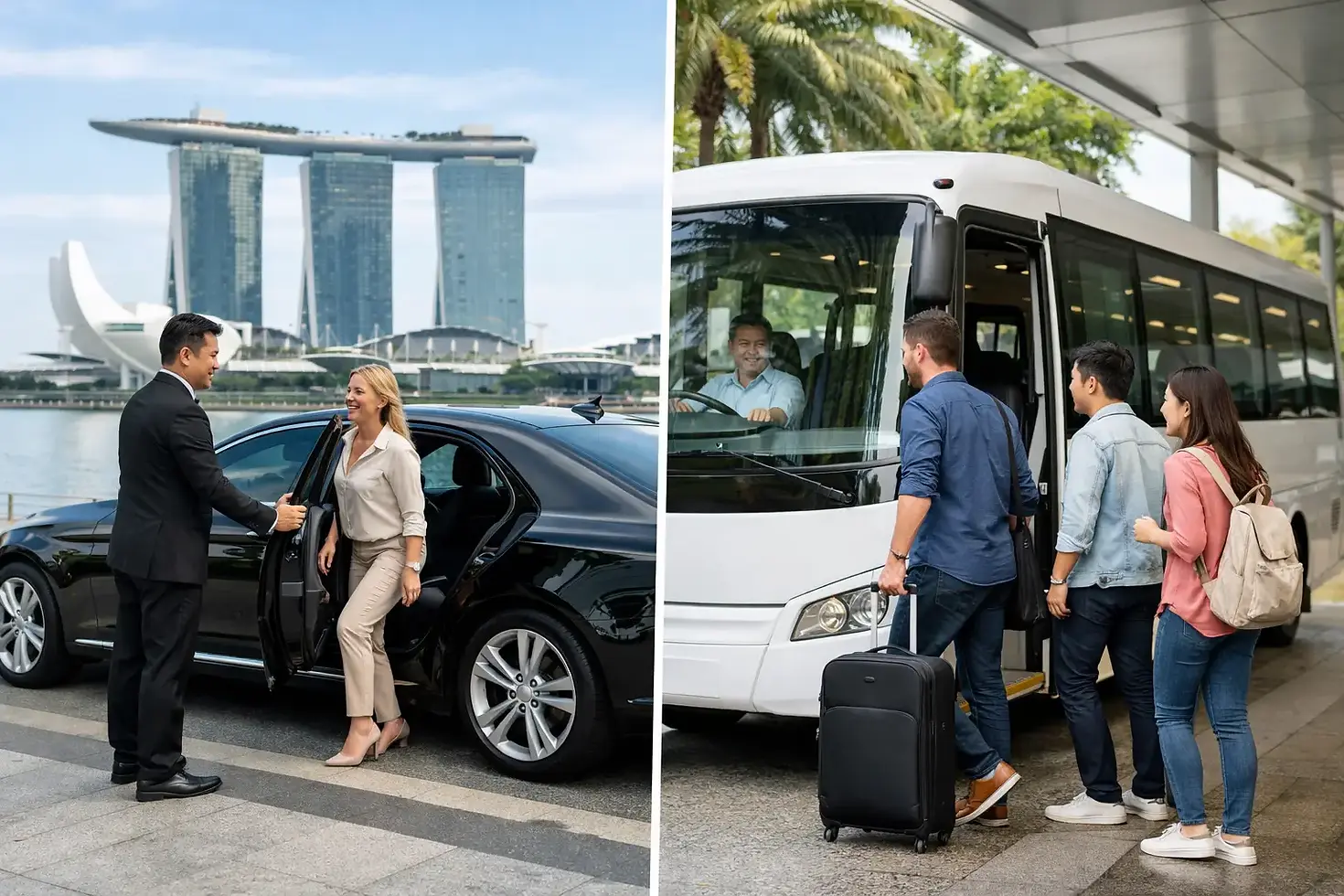
A private transfer is reserved for your party. The vehicle collects you at the agreed time and location, then travels to the stated destination without picking up unrelated passengers. You select a vehicle category based on passenger numbers, luggage and the level of comfort required. This may be a sedan for a couple, a 6- or 13-seater maxi cab for a family or small group, or a minibus or coach for larger movements.
A shuttle operates on a shared basis. Passengers may have different collection points, flight times or hotel destinations. The route is planned around multiple bookings, so the final travel time can vary. Some shuttle services use fixed schedules; others confirm a collection window rather than a precise pick-up minute.
Neither model is automatically better. A shuttle suits travellers who prioritise the lowest possible per-person cost and can accept a less controlled journey. A private transfer suits passengers who need certainty, space and a direct route.
When a shuttle is the sensible choice
Shuttles work well for uncomplicated trips. If you are travelling alone or as a pair, carrying light luggage and heading to a major hotel or transport hub, sharing can reduce the cost of the journey. It can also be practical when your arrival or departure time is not tightly connected to a meeting, cruise check-in, event registration or onward border crossing.
The trade-off is time. A shuttle may wait for other passengers, take a route that is not the shortest to your address, or arrive earlier than you would ideally like for an airport departure. This is manageable when you have a generous buffer. It is less suitable when a missed flight, late client meeting or delayed crew call has consequences.
Before choosing a shuttle, confirm whether the quoted price includes your luggage, whether the service is door to door, the maximum number of stops, and how long the provider may wait after your flight lands. These details matter more than a low starting price.
Why private transfers suit time-critical journeys
Private transfers are designed around your booking rather than a group schedule. Your driver arrives for your party, your luggage goes into the vehicle allocated to you, and the journey begins when you are ready within the agreed collection terms. That control is particularly valuable for early-morning flights, late-night arrivals, business travel and journeys with young children or older relatives.
For airport transfers, a private service also makes it easier to plan realistically. You can book collection from a home, hotel, office or event venue and allow for the passengers, bags and check-in timing involved. After landing, the vehicle can be arranged around the stated arrival details rather than a shuttle departure cycle.
There is a cost difference, but it should be assessed per vehicle, not only per passenger. A private 7-seater may be better value for five or six people than purchasing several individual shuttle seats, especially once excess luggage charges or separate last-mile trips are considered.
Direct routing matters for business travel
Corporate travellers do not usually need a shared route when they are carrying presentation equipment, moving between meetings or landing before a fixed appointment. A private sedan or executive MPV gives the organiser one confirmed vehicle, one collection time and one direct destination.
For companies arranging staff transport, a private minibus or coach provides even more control. The route, shift timing and pick-up points can be planned for the workforce rather than fitted around public shuttle operations. This is useful for recurring transport, project teams, production crews and event staff travelling outside standard hours.
Families need seats and luggage space, not assumptions
A vehicle can technically have enough seats while still being unsuitable for the trip. Four passengers with large suitcases, golf bags, pushchairs or boxed items may need a larger vehicle than the seating count suggests. A shuttle may also have limits on oversized luggage or make loading less convenient if the vehicle is already carrying other passengers' bags.
With a private transfer, the booking can be matched to the actual load. State the number of adults, children, infants requiring child seats where applicable, and every substantial item of luggage. For groups, it is better to allow extra capacity than to rely on bags fitting across seats or in the aisle.
Choosing the right vehicle for a private booking
The vehicle category should follow the journey requirements. Sedans suit one to three passengers with moderate luggage. Maxi cabs and MPVs are practical for families, airport groups and small corporate parties that need more room. A 13-seater, minibus or coach is more appropriate when one organiser is moving a larger party together.
Do not book purely by passenger total. Consider whether everyone must travel in one vehicle, the luggage volume, collection access at the property, and whether the group has mobility needs. Wheelchair-accessible transport should be requested specifically, as standard vehicles may not have the required access or securing arrangements.
For premium travellers, an executive MPV or luxury sedan can be appropriate for client collections, VIP guests and formal occasions. The operational advantage is not only appearance. It also gives the booking coordinator a dedicated, well-timed vehicle instead of asking guests to navigate an unfamiliar shared service.
Cross-border travel changes the calculation
For Singapore-to-Malaysia travel, the private transfer versus shuttle comparison becomes more significant. Border traffic, passenger clearance and onward schedules can all affect the journey. A shared shuttle may mean waiting for every passenger to complete immigration formalities before the vehicle proceeds. If one traveller has a delay, the rest of the group may be affected.
A private cross-border vehicle keeps your party together and makes the itinerary easier to manage. This is useful for families, airport connections, business delegations and groups travelling to Johor Bahru or other Malaysian destinations. It does not remove immigration requirements, and passengers must still carry the correct travel documents, but it avoids coordinating the border process with unrelated travellers.
When requesting a cross-border quote, provide the full pick-up and destination addresses, travel date, collection time, passenger count and luggage details. Ask whether tolls, waiting time, late-night charges and any route-specific surcharges are included. Clear booking information prevents last-minute changes and gives the operator the basis to allocate the correct vehicle.
Price: compare the complete journey, not the starting fare
A shuttle's advertised fare may look lower because it reflects a shared seat rather than a dedicated vehicle. That is a fair comparison only if the shared service meets your timing, destination and luggage needs. Add any fees for extra bags, off-route addresses, child equipment, late arrivals or additional connections before deciding.
For private transport, the key question is what the vehicle rate covers. Confirm the pick-up point, destination, vehicle type, included waiting period and applicable surcharges. Airport collections, midnight travel, public holiday demand, cross-border routes and hourly charters may have different pricing terms.
Upfront booking is useful because it fixes the service requirement before the day of travel. It also gives the transport provider time to dispatch the right category rather than substituting a smaller vehicle when demand is high. MAXI-CAB.COM supports advance bookings across sedan, maxi cab, minibus and coach categories, including 24-hour airport and group transport requirements.
A quick decision rule before you book
Choose a shuttle if the journey is flexible, the luggage is light, the destination is on its normal route and saving on the individual fare is the main priority. Choose a private transfer if you need a confirmed collection time, direct travel, enough space for a group or luggage, or a vehicle that can support a specific requirement such as executive, wheelchair-accessible or cross-border transport.
If the trip has a deadline, book for the operational reality rather than the cheapest advertised option. Give the transport provider accurate passenger and luggage details, keep your phone available around collection time, and build a sensible buffer around flights, events and border crossings. That preparation is what turns a transport booking into a journey you do not need to manage.


Comments