


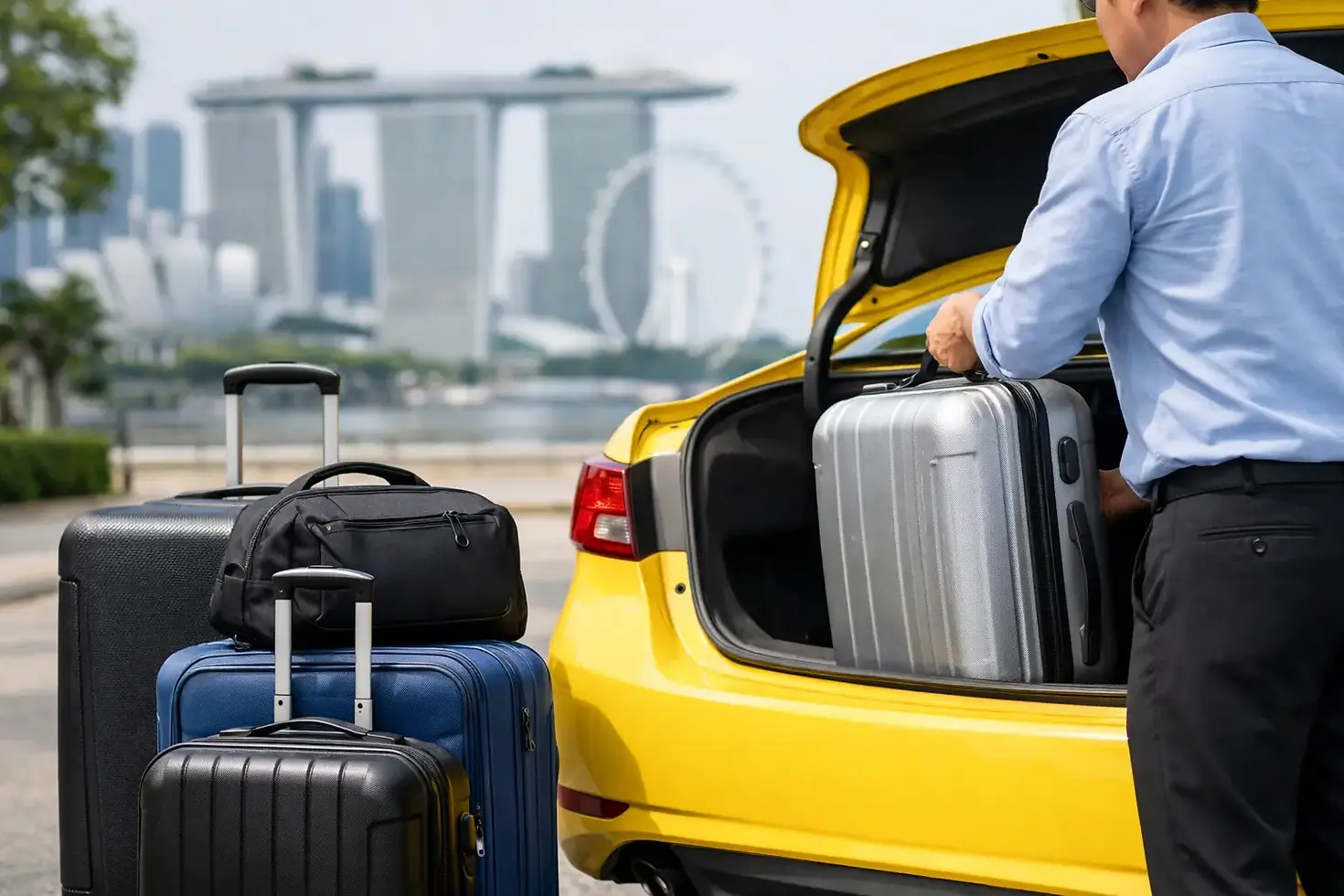
What Size Cab for Luggage? Choose Right
Two passengers with four large suitcases can need more space than five passengers with hand luggage. That is why asking what size cab for luggage is the right question before you book. The best vehicle is not only about seat count. It is about how many bags you have, how bulky they are, whether you need airport pickup, and whether everyone expects a comfortable ride rather than bags stacked on laps.
For airport transfers, hotel pickups, family trips and business travel, luggage capacity is usually where bookings go wrong. People count passengers, choose the cheapest car that fits the headcount, and only realise the problem when the driver arrives. If you want a smooth pickup, especially on a timed journey, match the vehicle to both people and bags from the start.
What size cab for luggage depends on more than passenger count
A standard saloon works well for light travel, but it stops being practical once you add large check-in bags, pushchairs, folded wheelchairs, golf bags or shopping cartons. The boot size matters, but so does the shape of the luggage. Four cabin bags can often fit more easily than two oversized hard-shell suitcases.
This is why transport providers usually classify vehicles by both seating and luggage capacity. A 6-seater MPV, for example, may carry six passengers comfortably only if the group has light baggage. If every traveller has one large suitcase and one cabin bag, you may need to reduce passenger load or move up to a larger maxi cab.
For travellers heading to or from the airport, this matters even more. Airport journeys are time-sensitive. There is no benefit in saving a little on the booking if the vehicle arrives and cannot safely take the load.
A practical way to choose the right vehicle
Start with the luggage, not the seats. Count how many large suitcases, medium bags, cabin bags and odd-sized items you have. Then count the passengers. After that, think about comfort. A vehicle may technically fit everyone, but if the rear storage is full and bags need to be placed inside the passenger area, the journey becomes less comfortable and less efficient.
As a working guide, a standard taxi or saloon usually suits one to three passengers with light to moderate luggage. If you have three adults and three large suitcases, it may still work depending on the vehicle model, but it is close to the limit. Add one more suitcase, and you are already in safer MPV territory.
A larger MPV or 6-seater is usually the practical choice for small families, airport runs with multiple check-in bags, or business travellers carrying presentation materials and luggage. Once you move to groups of five to seven with full-size suitcases, a maxi cab is often the correct option rather than a standard cab.
For bigger groups, an 8-seater, 9-seater or 13-seater vehicle gives far more flexibility. These are especially useful when travelling with children, elderly passengers, tour groups or cross-border luggage loads where people tend to bring more than one bag each.
Typical cab sizes and what they usually handle
Standard taxi or saloon
Best for one to three passengers with two to three large suitcases, or up to four passengers with very light baggage. This is the most economical option, but it has the least room for error. If you are carrying bulky items, it is rarely the right choice.
MPV or 6-seater
A strong option for families and small airport groups. It generally handles four to five passengers with several large bags more comfortably than a saloon. If you have a pushchair, extra hand luggage or unevenly sized cases, this category gives useful flexibility.
7-seater or 8-seater maxi cab
This is where group airport transport becomes much easier. These vehicles suit medium-sized groups with luggage and are often the safest answer when customers ask what size cab for luggage they need for a flight transfer. You are paying for usable space, not just extra seats.
9-seater to 13-seater maxi cab
Ideal for larger family groups, event movements, staff transport with bags, cruise transfers and airport parties carrying a full luggage load. These vehicles are designed for group logistics, so they make more sense than splitting into two smaller cabs when everyone needs to arrive together.
Minibus, coach or luggage van
For very large groups or luggage-heavy movements, a standard passenger vehicle may not be enough. If your booking involves exhibition materials, sports equipment, crew cases, musical instruments or many large suitcases, it can be more efficient to book a minibus with proper storage or add a separate luggage vehicle.
What travellers often underestimate
The first issue is suitcase size. Many people say they have "four bags", but four cabin bags and four 30kg check-in cases are completely different loads. Hard-shell luggage also takes up space differently from soft bags. The second issue is irregular items. Folded prams, wheelchairs, baby gear and shopping boxes often create more loading problems than standard suitcases.
The third issue is collection point timing. At airports, hotels and event venues, loading delays matter. If the vehicle is too small, repacking on the kerb wastes time and creates stress. For business and family travel alike, that is avoidable if the booking is sized correctly from the beginning.
When it is better to book one size up
There are situations where moving up one vehicle category is the sensible decision. Early morning airport departures are one. Group travel with children is another. Cross-border journeys can also justify more luggage space because passengers often bring larger bags, shopping items or multiple cases for a longer trip.
It also makes sense to size up when the group includes elderly passengers. More room means easier boarding and less need to squeeze bags around feet and knees. For corporate bookings, choosing a larger vehicle can simply present better. Executives arriving with luggage generally expect a clean, comfortable transfer, not a tight fit.
The cost difference between categories is usually smaller than the inconvenience of underbooking. If there is any doubt, the more efficient option is often the larger cab with clear luggage capacity.
What size cab for luggage at the airport?
Airport transfers are where vehicle matching matters most. Passengers often have at least one check-in suitcase each, plus cabin bags and personal items. A party of four flying internationally may therefore need a much larger vehicle than they would for a local journey.
For two passengers with two large suitcases and two hand-carry bags, a standard cab may be enough. For four passengers with four large suitcases, an MPV or maxi cab is normally the safer booking. For six or more passengers with full luggage, a larger maxi cab or minibus is usually the right fit.
If you are arriving after a long-haul flight, comfort matters as much as capacity. A vehicle that only just fits the luggage is rarely the best option after several hours in the air. Extra space reduces loading issues, speeds up departure from the terminal and makes the ride more manageable.
Booking accurately saves time on the day
The best bookings include passenger count, number of large and small bags, and any non-standard items. That gives dispatch teams a clear picture and helps avoid vehicle mismatch. For hotels, travel organisers and office administrators, this is especially useful because one clear booking note prevents repeated calls and last-minute changes.
Where a fleet includes saloons, MPVs, 6-seaters, 7-seaters, 13-seaters and larger transport options, the point is not simply to offer more vehicles. It is to assign the right one for the load. That is how transport stays punctual and efficient.
If you are uncertain, give the luggage details first and let the vehicle size follow. A provider with broad fleet coverage, such as MAXI-CAB.COM, can usually match the journey more accurately when the bag count is clear from the outset.
The simplest rule is this: book for the real load, not the minimum possible fit. A cab that arrives with enough luggage space does more than carry bags. It keeps the whole journey on schedule and starts the trip properly.


Comments